




Higher education is changing. More students than ever before are juggling college with work, family, and other responsibilities.

They're stretched for time, are underprepared for their studies, or face obstacles to learning. Standard student support methods simply aren't enough anymore.

The rise of non-traditional learners

In our latest report, we delve into the data, exploring the challenges and motivations of these New Majority Learners, and what it all means for institutions.

Key findings reveal a dramatic shift:

  • Non-traditional learners now constitute the New Majority in higher education.
  • 40.2% of students are over the age of 22.
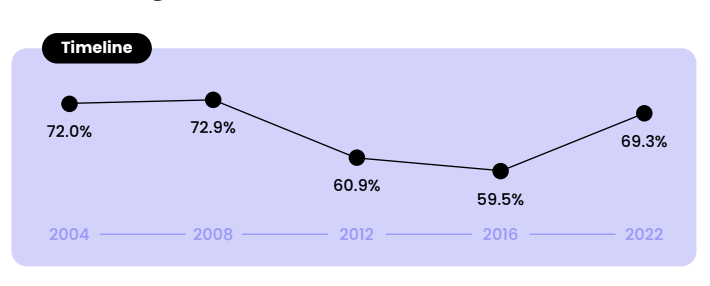
  • 69.3% work whilst studying.
  • The number of neurodivergent learners has increased by a staggering 267% since 2004.

These shifts have significant implications for institutions across the country.

Time-poor learners, underprepared learners, and learners facing innate barriers generate wide-ranging challenges and opportunities that higher education is currently ill-equipped to overcome.

Be the first to discover the solutions.

Introduction 

What comes to mind when you think of the 'typical' higher education student? A review of the demographic shifts over the last twenty years indicates it might not be what you think.

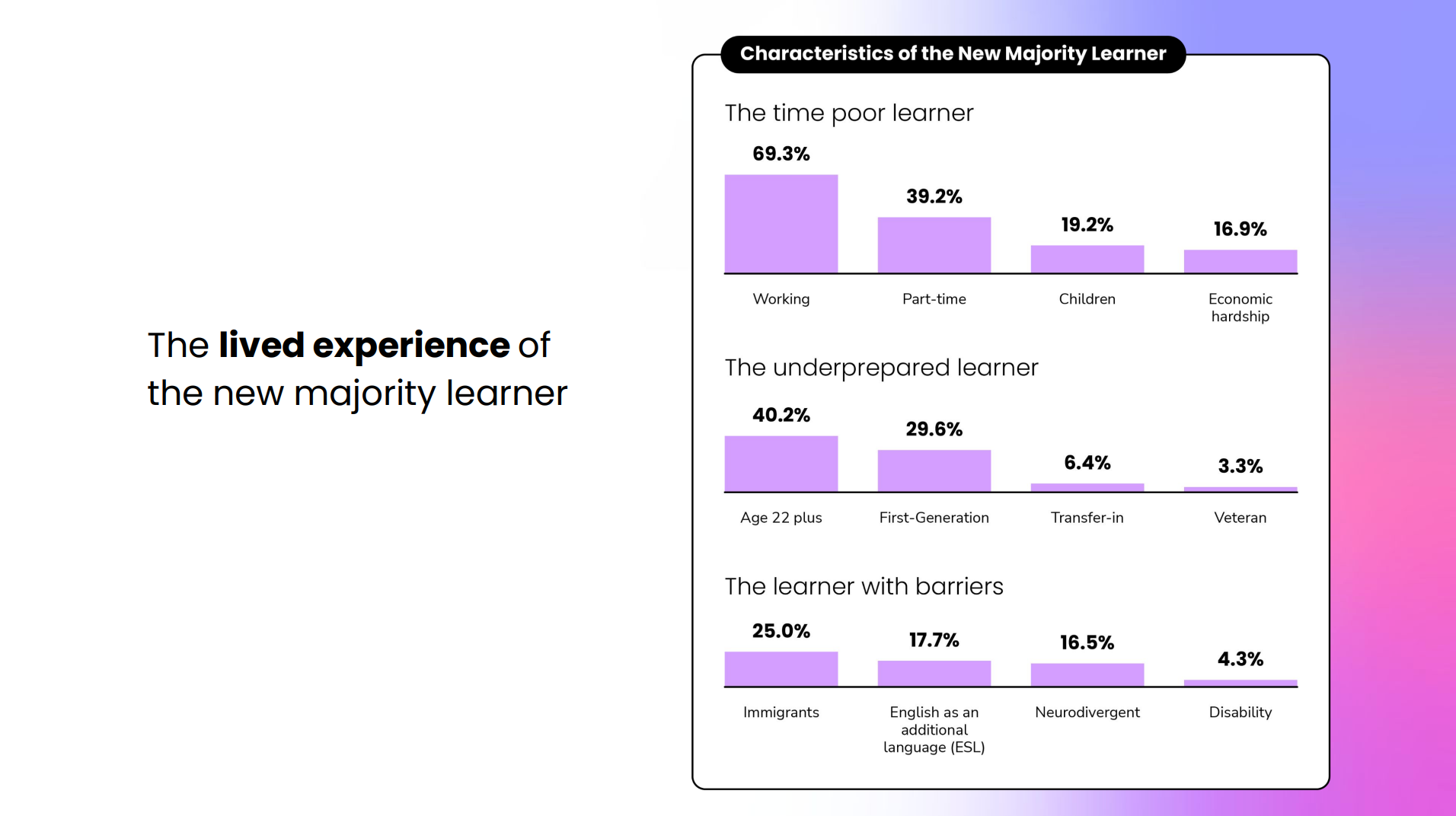
Non-traditional learners now constitute the New Majority in higher education. 40.2% of students are over the age of 22 and 69.3% work while studying. Part-time learners constitute 39.2% of the student population and the number of neurodiverse learners has increased by 267% since 2004. The conventional concept of a college student is no longer accurate.

In this report we'll delve into the multifaceted characteristics of the New Majority, how the makeup of the student body has changed over the last twenty years, examine the factors driving their enrollment growth, explore the unique challenges and opportunities they present, and analyze the strategies institutions can employ to effectively serve this burgeoning population.

Amidst the backdrop of an impending enrollment cliff, as population growth stalls and traditional demographics explore alternative learner pathways and question the value of a college level qualification. Higher education institutions need to evolve their approach to attract, retain, and support a changing student population to ensure their long term viability.

“The overall immediate college enrollment rate in 2022 was not measurably different from the rate a decade earlier in 2012, or from the rate in 2021. However, the total number of undergraduates enrolled decreased by 13% over this period - National Center for Education Statistics”

The key to achieving this lies in pivoting toward the needs of the New Majority. These demographics will help plug enrollment and retention gaps, evolve the culture of education by seeking to balance learning with other parts of their life and, above all, have a desire to develop into lifelong learners. A failure to cater to them will leave colleges lagging behind in an increasingly competitive market.

But attracting and retaining these students requires a paradigm shift in how higher education institutions operate. They are often time poor (working while studying, adults juggling family responsibilities, career demands, and financial challenges), underprepared (first-generation college students, international students from a different education culture, veterans, or individuals from underrepresented communities) or face individual barriers to their learning (physically disabled, neurodiverse or have English as an additional language).

Should they fail to do so, they risk perpetuating a cycle of disengagement. Where poor learning experiences lead to self-blame, frustration, and reduced effort, creating a downward spiral that impacts individuals, institutions and society at large. Institutions have long been aware of these challenges and have looked at resolving it in abstract terms, such as the Tinto Model. However, for the New Majority, there is a need for real, practical change.

Learning is a personal journey where success requires active effort, intentional engagement, and finding a system that works for you as an individual. By understanding and embracing the needs of the New Majority, institutions can provide the tools and support for learners to take control of their learning thereby increasing retention rates, improving the student experience and ensuring their own sustainability; all while contributing to a more prosperous future for each and every learner. 

Who are the New Majority?

To know how to serve New Majority learners, institutions must first understand who these individuals are. Only by comprehending their background, environment and lived experience can they truly begin to support them on campus and beyond.

The Education Design Lab has conducted significant research into these demographics and identified a number of characteristics that indicate a non-traditional learner. They include:
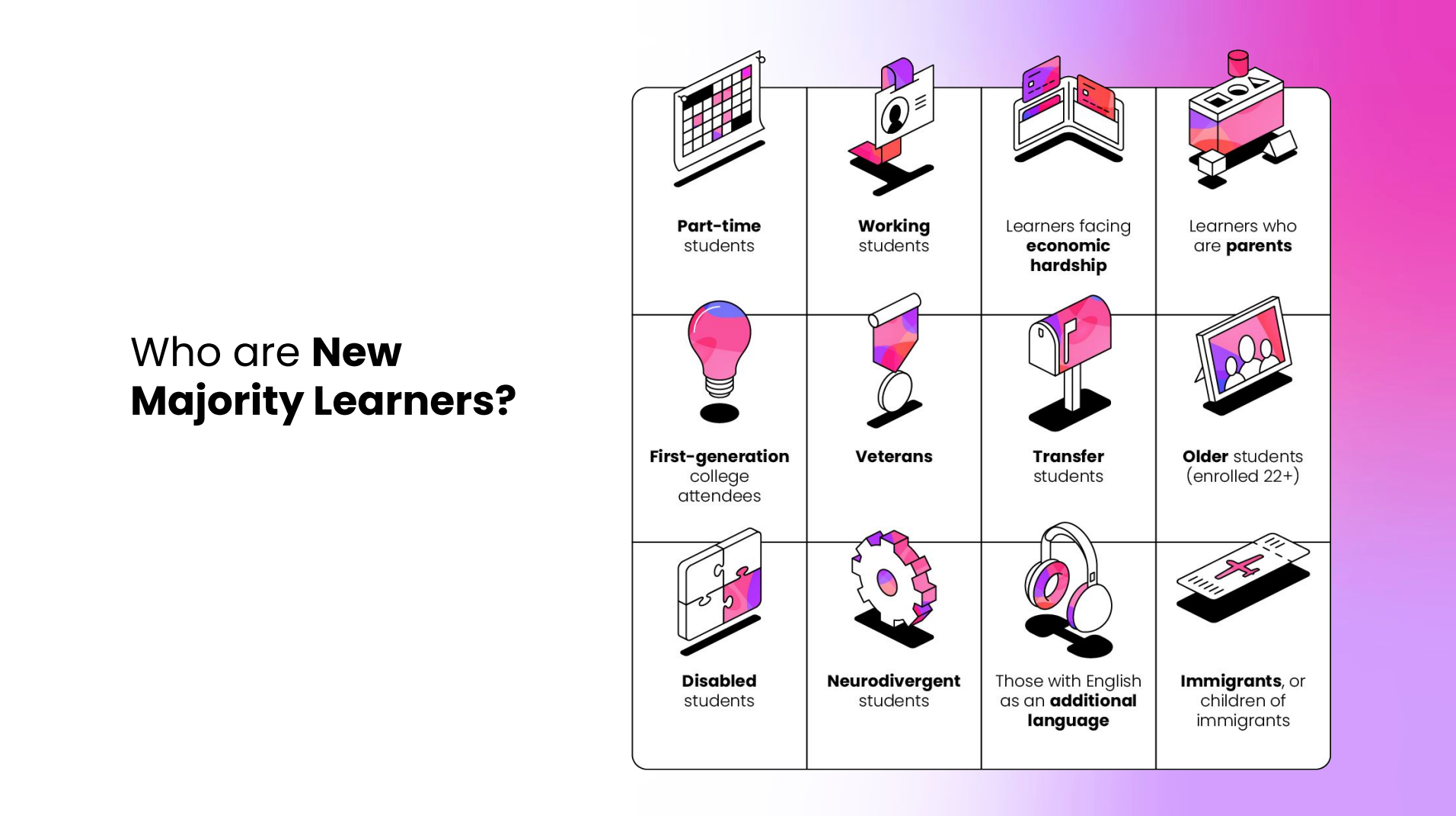
undefined-May-29-2026-04-15-14-2717-PM

Across the board, individuals within these defined characteristics have been historically underserved by traditional education. There are many possible reasons for this, whether they faced barriers to entry, challenges with affordability or lack of funding and support, a lack of study skills, ingrained stigma, or inaccessible practices, non-traditional learners have been disadvantaged compared to their peers.

“College was never designed for the success of these learners, and was often designed to purposefully keep them out.” - Education Design Lab

Now, as traditional demographics explore alternative learner pathways and question the value of a college level qualification, non-traditional learners are becoming a larger percentage of the student population. This is why we’re defining them as the New Majority. For institutions, this emphasizes the need to re-evaluate their propositions and tailor their offerings.

While each of these identifying characteristics can place an individual within the New Majority, it is critical to also note the regularity of intersectionality of these traits. For many, their identity extends beyond one individual characteristic, reinforcing the scale, and the nuance, of the New Majority.

For example, we can infer that veterans are likely to be enrolling as older students, aged over 22. Or that immigrant learners are likely to also fall into the ESL category. Likewise, students facing economic hardship will likely be working while studying to provide more security for themselves and their dependents.

This intersectionality creates a complex environment and makes it difficult to come up with one true percentage of the student population that this group represents (for more information on our calculations, take a look at our methodology section). As such, being proactive in your approach to evolving higher education offerings in line with the shifting needs and requirements of the modern learner, institutions can ensure they are equipping, empowering and encouraging all students.

Understanding the New Majority’s three key challenges

Non-traditional learners are firmly establishing themselves as the New Majority across the United States. And their complex, interwoven characteristics create a nuanced picture for higher education professionals to comprehend.

The thing institutions need to realize is that learning is an inherently personal journey. That success requires active effort, intentional engagement, and finding a system that works for each learner as an individual. Those working in higher education have it within their power to facilitate this, and make the necessary changes to avoid a cycle of disengagement across their cohort.

Historically, higher education has overlooked the fact that everyone struggles with engagement, focus, and retention, not just students with diagnosed learning differences. This is particularly prevalent when it comes to content delivery. A survey from the American Psychological Association found that almost 75% of students claim to suffer from moderate to severe psychological stress; which can make finding solutions difficult.

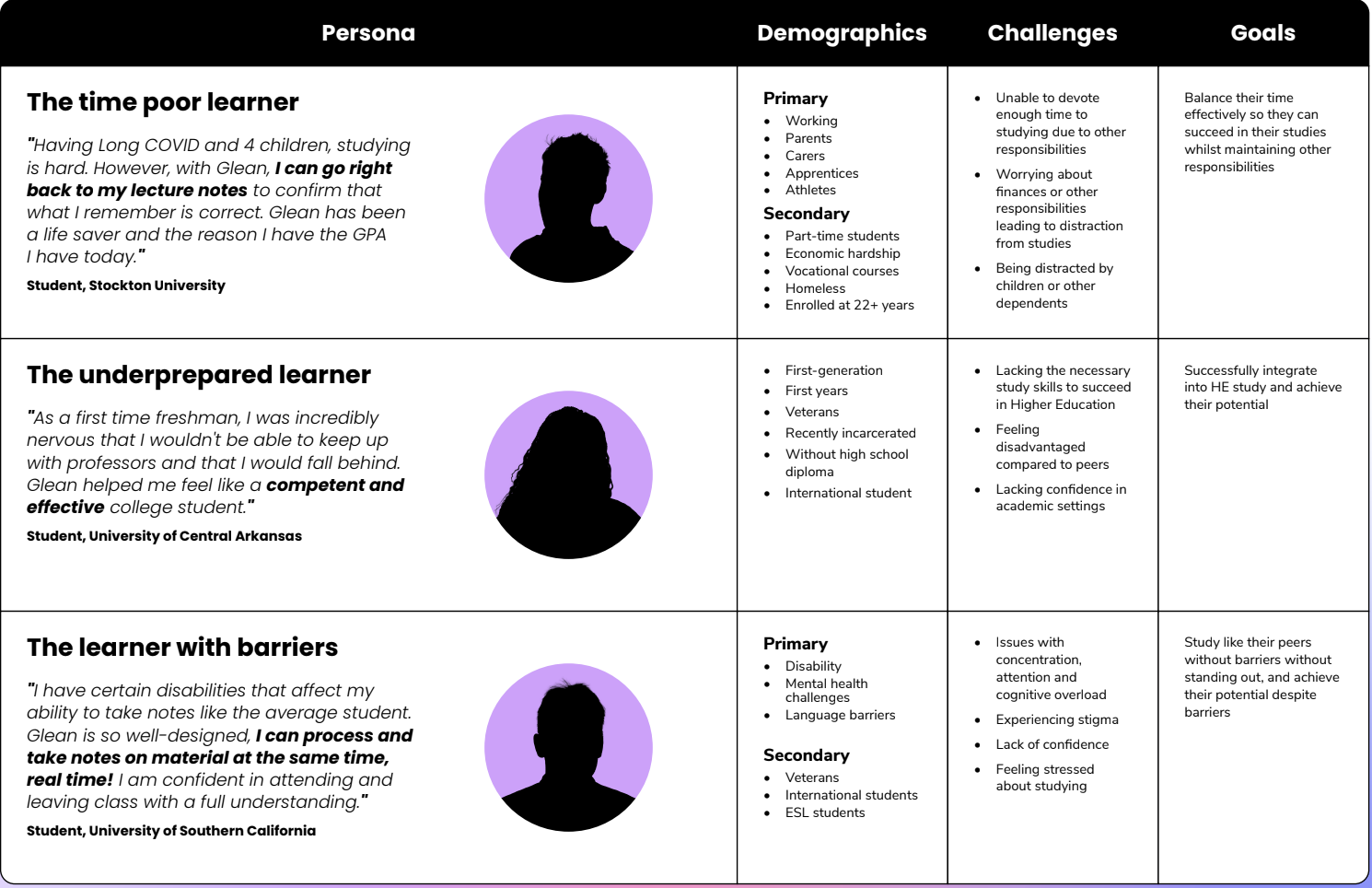
We have identified patterns, grouped into three overarching themes, that can help institutions understand how to break the cycle and serve the varied needs of the New Majority, to ultimately create engaged and effective learners. Those groups are based on traits that often align with one another to form the lived experience, and shared challenges, of these learners.

With an awareness of the likely demographics, we can explore how they are demonstrated as lived experiences through the following three New Majority learner personas.
Screenshot 2026-10-02 at 09.23.08

The New Majority in higher education

Using a combination of the National College for Education Statistics database, the National Postsecondary Student Aid Survey (NPSAS) and IPEDS data, we have researched how often New Majority characteristics arise, how prevalent the defined non-traditional learners persons are and how geographic and temporal variations manifest across the US.

From the data (visualized overleaf), it is clear to see that non-traditional learners do indeed constitute the New Majority. Over 40% of students are over the age of 22, a marked shift from the long standing
notion that freshmen arrive straight from high school. Similarly, nearly 20% of those now studying in higher education have children, a change which brings a whole raft of different learning challenges to those
parenting while seeking additional qualifications.

Part-time students also constitute 39.2% of the learner population, indicating the volume of people approaching education in a different manner to full time learning. Concerningly, studies from the
National Student Clearinghouse Research Center have found they have a much lower credential completion rate of 33.7% compared to 67.2% for full time peers meaning for those schools with large part-time populations, retention and persistence will be key focus areas for success.

The report also identified that, regardless of income level, students from more affluent neighborhoods had sharply higher completion rates than those from lower income neighborhoods, further emphasizing the intersectionality of non-traditional learner traits and the need to provide adequate support to improve the likelihood of course completion.
undefined-May-29-2026-04-15-13-7601-PM

Working students 

Screenshot 2026-10-02 at 09.51.16

The most commonly occurring characteristic of the New Majority is learners who work while studying. As a percentage, they are consistently more present despite seeing a 4% decrease since 2004. Still, figures remain high, with the most recent data indicating that 69.3% of students are working while studying.

Taking a more detailed look into the latest NSPAS data, 30.45% of students are working part-time while a staggering 40.63% classed themselves as in full-time employment. Looking at a more granular level, full-time employment has increased by 61% since 2016, with 39% of students at an Associate Carnegie classification working more than 31 hours per week.

From an institutional perspective, this means students are time poor, and likely find themselves trying to absorb their course material in a range of environments such as a break room at their place of work or during their commute. Nowhere is this more of a concern than in North Dakota and Montana who have the highest percentage of working students than any other state at 71.9%.

Not only can this create a situation where there is a conflict of interests, it can increase pressure on learners to keep up with their grades as well as meet expectations at work to fund their studies. This is especially true for first-generation college students, who are substantially overrepresented among working students compared to their peers.

This reality requires numerous forms of support to help guide students through such complex scenarios but also an openness to evaluating and measuring performance, comprehension and knowledge in new ways that better suit the New Majority.

Perhaps the most striking difference between working and non-working students, at 4-year colleges in particular, is the $18,871 difference in the average annual income of their parents. For those institutions, having an awareness of financial stability of their students is critical for maintaining completion and retention rates, with working students being more susceptible to leaving their program for monetary reasons, rather than a lack of academic talent.

Economic hardship
Screenshot 2026-10-02 at 09.53.40

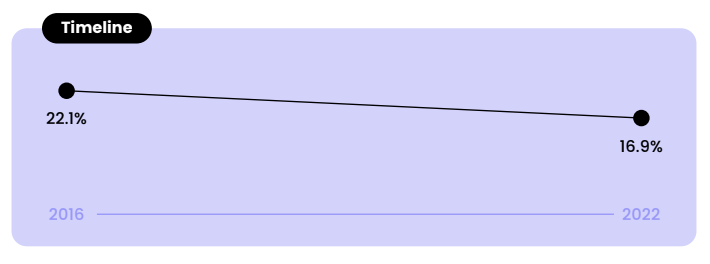
Understanding the experience of working students cannot be separated from economic hardship’s undoubted influences on learners. Since 2016, the percentage has trended down to the tune of 24% yet 16.9% of students still experience this as their reality. Maryland has the lowest percentage, 13%, whereas New Hampshire reports a figure over twice as high at 27.8% of their student population.

Research by the Cowen Institute discovered that, over the past three decades, the average cost of college tuition in the U.S. has tripled. That would, in theory, allow us to infer that more students would also be struggling to keep up with these rise in costs.

Institutions therefore must ask themselves, is it that there is less support for financially at risk students as budgets have not risen in line with tuition costs? Is it that the barriers to entry are simply so significant that economically disadvantaged students are no longer applying? Or is it that a lack of engagement with education has led to lower grades and a lower chance of qualifying for scholarships.

80% of first-generation students reported that they used financial aid, in contrast with 65% of their peers yet some of the most influential factors impacting college access and college persistence rates are economic in nature. Clearly there is a discrepancy here meaning that some learners are missing opportunities to access higher education on account of the required investment.

With the impending enrollment cliff, institutions can’t afford to miss out on students on account of prohibitive costs of entry. Therefore, to better serve this non-traditional population, doors must be opened to explore avenues of support that allow talented individuals to fulfil their potential, rather than be disenfranchised on the grounds of financial insecurity and a need to prioritise employment over education.


First-generation students
Screenshot 2026-10-02 at 09.55.51

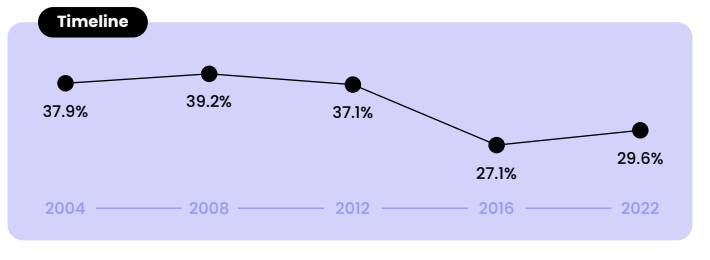
Although the trend for first-generation students in higher education has actually decreased by 22% since 2004, they still constitute 29.6% of students. There could be a number of reasons for this, including fewer opportunities for non-privileged students, yet there remains a need to better serve this facet of the New Majority. Oregon (10.4%) has experienced this decline to a greater extent than any other state yet West Virginia and Utah sit above the national average with totals at 35.7% and 33.8% respectively.

Research from the Pell Institute has shown that many students see college as a path to economic mobility and stability, viewing their degree as a source of pride and a means to uplift their families.

This has a knock on effect on the learners themselves, with many experiencing significant personal growth during college which, if successful, can lead to self-discovery, resilience, and a lifelong love of learning.

For first-generation learners however, the Cowen Institute found that, “family support appears to be a major influencing factor on college persistence, with many studies discussing the barriers faced by underrepresented students in terms of social and cultural capital to describe family and other support structures for students”.

This reinforces the findings of the Pell Institute that indicated how first-generation students often arrive in college underprepared for the academic rigour of education and feel a sense of separation from their faculty and peers.They are unaware of the more intense nature of college compared to high school with difficulties further exacerbated by the pressure first-generation students feel from families and communities to succeed.

Institutions therefore need to understand that students who do not have parents with college degrees are less likely to have the cultural capital, and therefore the support network, to help learners navigate the hidden curriculum of college. This is particularly pertinent for community colleges who serve a much higher percentage of first-generation students (64%) compared to their four-year counterparts (47%).

ESL and immigrant students
Screenshot 2026-10-02 at 09.58.37

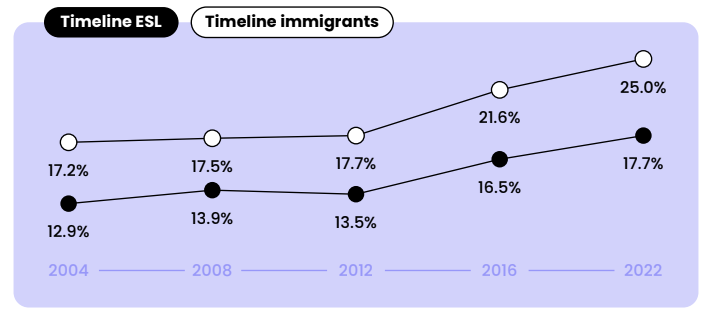
Due to an undeniable intersectionality of ESL and Immigrant characteristics, we shall explore these traits in tandem to better understand their shared experiences. Between 2004 and 2022, the number of ESL students increased by 37% to 17.7% of the population. A similar increase can be found among Immigrant students, who increased by 45% to account for 25% of the 2022 higher education population; however we may expect this figure to decrease over the next few years.

Across the US, Massachusetts (19.1%) and Illinois (18.6%) sit above the national average for ESL learners while DC and Vermont have seen the largest population increases of 9.6% and 6.3% respectively. Vermont has also seen an 8.7% increase in immigrant students yet it is Idaho with the most significant immigrant percentage change, a total of 9.5%. Despite these increases, California (26.3%) and Florida (26.1%) host the most substantial immigrant population as a percentage of their total.

For institutions, this demographic shift represents a need to better serve relatively underprepared New Majority learners who have previously been educated in a different country or their native language. This is often experienced in relation to having the requisite study skills to learn, meeting comprehension standards and having an opportunity to revisit content beyond the lecture hall, reinforcing their understanding of the material.

Moving to a new country, or studying in a non-native language, can be both challenging and mentally overwhelming. A lack of sufficient support services could not only drive disengagement, but lead to a lack of persistence as the barriers to learning simply become too substantial to overcome.

Interestingly though, when looking at completion percentages, ESL students return a higher success rate compared to their peers, 21.8% to 19.5%. This suggests that for institutions, this demographic is motivated to achieve their academic goals and that the provision of support will only serve to increase their chances of doing so.

Disability
Screenshot 2026-10-02 at 10.00.11

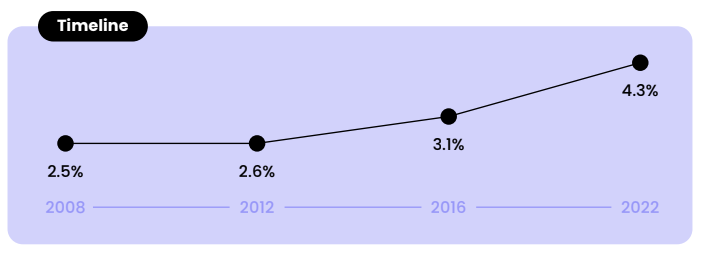
While the figure of 4.3% may appear relatively low compared to other characteristics of the New Majority, it has seen a 72% increase since 2008. This indicates a growing trend that more and more disabled students are accessing opportunities that were previously not available to them.

Perhaps most alarming though, according to the National Center for Education Statistics, 65% of students don’t report their disability, particularly if it is not visible, to their school. This means the population of disabled students is actually significantly higher than the statistics would suggest.

The upwards trend, combined with an absence of self-advocacy owing to fear of stigmatization, emphasizes the importance of moving beyond accommodations and a regulatory driven support system, to becoming accessible by design.

In doing so, institutions will not only meet Americans with Disabilities Act (ADA) compliance regulations, but also catch the missing 65% of students who haven’t advocated for their needs. Building robust practices enables this growing minority to access higher education in a way that was historically impossible.

On a state level, this is pertinent at both ends of the spectrum. For Connecticut’s 7.1% disabled student population, the need to act appears much more urgent. Whereas Idaho (2.2%) may need to look more closely at the barriers to entry that are preventing this segment of the New Majority from accessing higher education in the first place or self-advocating to get the support they need.

Neurodiversity
Screenshot 2026-10-02 at 10.07.41

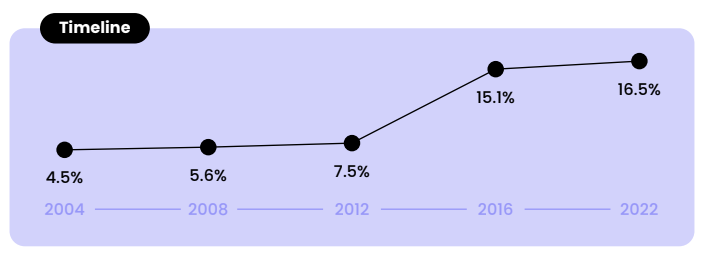
Compared to all other defining characteristics of the New Majority, it is neurodiversity that has seen the sharpest rise. 16.5% of learners identified as neurodiverse in 2022 marking a 267% increase since 2004. Utah (18.2%) and Arizona (17.5%) have experienced this increase most keenly, with their neurodiverse populations being the highest across the US.

The question for institutions to answer is: how is this experienced, for both students and teachers, in a learning environment? Often misunderstood as a lack of focus, neurodiversity is inherently interwoven with core learning challenges around attention, as defined in the learners with barriers persona. Traditional course delivery methods such as lectures can overlook near universal challenges with engagement, focus, and retention. For neurodiverse students, the need for an alternative is more vital than ever.

Poor learning experiences can be exacerbated by neurodiversity, leading to self-blame, frustration, and reduced effort which ultimately ends in a downward spiral of disengagement. The NSPAS data indicates that this leads to a lower course completion rate, with neurodivergent students being 26% less likely to complete compared to their peers.

Learning isn't just about teaching; it's about empowering learners to actively engage with information. Therefore, when looking to better understand and equip neurodiverse learners, there is a critical need to recognize learning as an active, personal process and provide the tools and support for them to take control.

How can higher education institutions support the New Majority?

Armed with the knowledge of who the New Majority are, institutions can begin to explore exactly how non-traditional learners can be best supported and how each department must adapt to respond.

How will it affect the faculty members delivering lectures? How can those working in student success look to maximize course completion rates? What can academic advising do to scale their services in line with increased demand?

The focus on the learner must be at the centre of all of these discussions. That integral alignment that learning is a personal journey and isn’t just about teaching, but equipping, encouraging and empowering learners to actively engage with information.

To quote Emily Nordmann, Senior Lecturer and the Deputy Director Education for the School of Psychology and Neuroscience at the University of Glasgow, institutions should look to raise the floor,not the ceiling.

Adopting a success first model

The current model of student support often operates within a compliance driven framework. This is particularly true for students with registered disabilities, seeking accommodations through the Americans with Disabilities Act (ADA).

The emphasis on regulation, and ticking boxes, can unintentionally restrict the scope of services to ensuring students meet minimum requirements for participation. This often leads to scenarios where institutions already have a lot of the right tools, they will simply be siloed in specific departments, rather than spread across campus for everyone to leverage.

This approach overlooks the broader goal of enabling all students to thrive academically and achieve their full potential. And while accommodations are essential, factors such as social support and a sense of belonging play an equally significant role in student success, and are relevant to more students than only those with registered accommodation needs.

Perhaps the most problematic facet of a regulatory approach is the reliance on self-advocacy. This is a new reality for learners entering higher education compared to the mandated support students received in high school or help from parents to apply for it.

According to the National Center for Education Statistics, among those who responded that they did have a disability while attending college, only one-third of students actually informed their college. That means there is a missing 65% of disabled students in Higher Education who do not receive the accommodations that they would benefit from.

Alongside a lack of self-advocacy, there are several reasons cited for this drop off including a lack of belief that the college has useful resources to offer, waiting times to receive support and an expectation that by disclosing their situation, they would be treated differently by faculty.

Whatever the motivation, the status quo is clearly unsustainable for supporting those students who require additional support to succeed. Within the context of an increasingly non-traditional learner demographic, and an understanding of the intersectionality of the associated traits and characteristics, institutions can safely assume that the scale of this lack of advocacy and support extends to other defining New Majority traits.

Therefore, there is merit in looking beyond providing a baseline, and investing in long term success for all, rather than through a lens of regulatory compliance. This is becoming accessible by design.

In her thesis, Dr Shelley Moore employs a bowling analogy to explain what a more appropriate, alternative approach could be so as to provide equity, rather than equality. Adopting a campus-wide, success driven approach moves beyond a transactional model of service delivery and centers instead on the student's holistic development. It recognizes that students have individual and varied needs and aspirations, and that success encompasses more than just academic achievement.

By prioritizing success, institutions can empower students to actively participate in their learning, develop self-advocacy skills, and build resilience in the face of challenges.

There are a three key components that constitute a success driven model:

  • Equip: By providing the right tools & technology to help students with their personal learning process, institutions make learning more accessible for all. Likewise, providing data-driven insights will allow individuals to make decisions that lead to further educational enhancements.
  • Empower: By starting with early, proactive engagement and personalised support plans, institutions can directly help learners to develop their study skills.
  • Encourage: By collaborating across departments and taking a strength-based approach, institutions can encourage students to learn from each other, fostering a stronger, more collaborative environment across campus.

Expanding access will allow institutions to improve New Majority student outcomes including increased retention rates, graduation rates, and overall academic achievement.

Additionally, students' wellbeing is enhanced with increased self-esteem, self-efficacy, and a sense of belonging. These improvements contribute to a strengthened campus community, fostering a more supportive environment for all students, especially those within New Majority demographics.

As a result, the institution's reputation is enhanced, gaining recognition as a leader in providing high-quality student services and more successful graduates. Ultimately, these efforts have a positive societal impact by contributing to a more dynamic and skilled workforce.

Deploy assistive technology

Central to scaling efforts to break the disengagement cycle for New Majority learners, is the application of technology. 2024 research from the US Department of Education explored not only the importance of assistive technology (AT), but also, its role throughout a student's educational lifecycle.

They found that “the AT needs of a child do not necessarily stop when they transition out of high school.” In other words, colleges must be proactively engaging with their communities to support the compulsory creation of a transition plan for children turning 16 in line with their post-secondary goals.

Research has also demonstrated positive outcomes including increased postsecondary education enrolment and academic outcomes, positive vocational outcomes and improved independent living skills. Therefore, introducing technology such as speech to text or captions has a demonstrable, positive impact on the learning experience of all students.

"Assistive technologies are crucial for supporting diverse learners. Proactively incorporating accessibility features, like captioned videos and screen-reader compatible text, benefits not only students with disabilities, but also those with auditory processing difficulties, ESL students, and anyone seeking to enhance their learning experience" - Michelle Traster, Adaptive Technology Specialist at Missouri Western State University

Embrace online learning

The rise of the New Majority in higher education has not only reshaped the student body; it's driven a profound transformation in how education is delivered and accessed. This demographic shift, combined with post-pandemic trends, is fueling an unprecedented surge in demand for online learning.

For the New Majority, online learning offers unparalleled flexibility and accessibility. It dismantles many of the barriers we’ve highlighted, allowing previously disenfranchised students to pursue their educational aspirations. The asynchronous nature of many online programs empowers individuals to learn at their own pace, seamlessly integrating education into their busy lives, a critical factor for those juggling work, family, and other commitments.

"The goal is for accessibility to become second nature and not a daunting task that must be completed. It's important to dispel the notion that accessibility provides an unfair advantage when in reality, it serves to level the playing field. Accessibility by design benefits everyone, not just those who directly use the resources." - Heather Dibblee, Disability & Accessibility Specialist at Anoka-Ramsey Community College

Institutions must embrace cutting-edge technologies and pedagogical approaches to create engaging and interactive online learning experiences. Critical to this is addressing the digital divide. Not all students have equal access to technology and reliable internet connectivity, whether that be through barriers such as visual impairment, or economic hardship making laptops, or wifi, unaffordable. Institutions that actively bridge this gap by providing equipment and ensuring that online courses are designed with accessibility in mind can gain an edge in an increasingly competitive market.

Failure to do so risks exacerbating existing inequalities and limiting opportunities for those who already face significant challenges. Fostering a sense of belonging and community is essential, while providing additional support is vital to creating successful online learning experiences for all.

This is not just about adapting to a changing demographic; it's about utilizing online learning to build a more equitable and accessible education system that serves everyone.

Utilize early warning systems

Analytic models and early warning systems have proven vital for supporting non-traditional learners and their persistence efforts. They help identify at-risk students and provide colleges with a broad picture of retention and persistence within their institutions, highlighting areas for further development, investment,
and growth.

However, in order for them to effectively serve students, it is important to view them often as a measure of a symptom, not an illness. They can help identify students needing additional support but the next step should likely include a level of personal contact with the student, either through a dedicated staff support supervisor or a peer mentor, to gain a deeper understanding of the unique circumstances faced by the student.

"We knew we had a challenge before us and we knew we needed to do something. We didn't have any organised framework or established way to identify who was at risk and determine the effectiveness of our retention efforts. With our new early warning system, when alerts were submitted, notifications were sent to the student's advisor and the student's academic and personal counsellor. In relation to academic performance, students with no alerts generally have a GPA of about 3.0. Students with one to three alerts might have a GPA down to about 2.0, and students with more than three alerts their GPA drops from one to below one." - Monte Schaff, Dean of Enrollment Management at United Tribes Technical College.

Develop first-generation programs

First-generation student programs can be a powerful tool for supporting New Majority learners by providing targeted support on new and potentially overwhelming subject areas. This includes navigating financial aid, understanding academic expectations, and building social networks on campus. By offering tailored resources and guidance, institutions can help these students overcome obstacles and thrive in college.

Creating a sense of community is a crucial aspect of this, especially for those that may feel isolated or out of place. Programs can connect students with peers, mentors, and faculty who share similar backgrounds or experiences. This network of support can then provide a safe space for students to share their challenges, seek advice, and build relationships that contribute to their overall wellbeing.

First-generation students may need additional guidance in choosing majors, planning careers, and accessing research or internship opportunities. Programs can offer specialized advising to help students navigate these decisions and achieve their academic and professional goals. By providing personalized support and resources, institutions can empower first-generation students to make informed choices about their future.

Financial literacy is often a significant challenge for first-generation students. Many come from families with limited experience in navigating college finances, and the complexities of financial aid can be overwhelming. Programs can offer workshops or individual counseling to help students understand their options, manage their budgets, and avoid excessive debt. This knowledge is essential for students to make sound financial decisions and maintain their focus on academics.

By promoting a culture of inclusivity, belonging and celebrating the unique contributions of first-generation students, institutions can send a powerful message of support and encouragement.

Introduce study skills courses

In a similar vein to supporting first-generation students, many characteristics of the New Majority learner will find themselves lacking the requisite study skills for higher education. Arriving on campus with differing learning experiences and backgrounds, these courses can be instrumental in equipping students with the tools and strategies they need to succeed in a demanding academic environment.

By focusing on essential skills like time management, note taking, critical thinking, and examinations, these courses can empower students to become more effective and confident learners.

One of the key benefits of study skills courses is their ability to level the playing field for students from diverse backgrounds. New Majority learners may come from high schools with varying levels of academic rigor or may have taken non-traditional paths to college. Study skills courses can bridge these gaps by providing a common foundation in essential learning strategies. This ensures that all students, regardless of their prior academic experience, have the opportunity to develop the skills necessary to thrive in college.

Moreover, study skills courses can help New Majority learners develop a sense of self-efficacy and confidence in their academic abilities. Many non-traditional students may harbor doubts about their ability to succeed in higher education. By mastering effective study techniques and strategies, these students can gain confidence in their ability to tackle challenging coursework and achieve their academic goals. This newfound confidence can have a profound impact on their overall college experience and future aspirations.

Explore student funding opportunities

Naturally, introducing new approaches and technologies can put a strain on resources. At a time when budget purse strings are tightening, knowing what support is available could make the difference in effectively supporting the New Majority.

Where new initiatives pose a significant hurdle for educational institutions, grant funding is worth exploring. Each institution and individual will have a unique set of circumstances that could unlock different sources of funding. To provide a flavor of the type of support that could be available, here are three examples:

1. Strengthening Institutions Program - Aims to support higher education institutions in becoming self-sufficient and expanding their capacity to serve low-income students. Grants typically range from $400,000 to $550,000 per year.

2. VETSTART (CEVSS) - The focus of this grant aims to support institutions prioritizing veteran student support. Requirements include monitoring rates of veteran student enrollment, persistence, and completion and providing supportive instructional services.

3. Student tech fees - Implementing a dedicated student tech fee can generate a consistent revenue stream for AT projects. Some institutions charge students per credit hour to raise funds for technology initiatives so it could be worth looking at. Also, student government/council may have a technology budget to support all students and offices typically apply to access a proportion of these funds.

How each department can support the New Majority

Having reflected on practical avenues for supporting the New Majority at an institutional level, here we’ll provide an overview as to what the rise of non-traditional learners means for a range of people on campus and how they can adapt to meet their evolving needs.

For all, building strong partnerships across departments and with senior campus stakeholders can create a more supportive learning environment for students in the New Majority. Utilizing data to track student outcomes and assess the effectiveness of programs can guide continuous improvement efforts, leading to innovative solutions and the promotion of a shared responsibility for the overall success of the student population.

Faculty

  • Varied teaching and technology: Teaching students how to use technology to do their work will better set them up for success beyond your classroom. Work with your Technology or IT department to better understand how you can integrate technology with appropriate ways to leverage AI to augment, rather than replace, learning.
  • Accessible content delivery: Ensure you're following UDL and accessibility standards in your teaching methods to support students who may have a harder time understanding or processing than others.
  • Supportive mentorship: Provide guidance, address academic challenges, and connect students with resources. Offer flexibility and understanding for students facing external pressures such as childcare or work commitments, or those who need accommodations.
  • Community building: Foster a sense of belonging through collaboration and opportunities for interaction beyond the classroom, such as group projects or study groups. Support for first-generation students who may not get it elsewhere is especially important.
  • Authentic assessment: Explore alternative assessment methods (real-world applications, pre-course assessments, or presentations) that accurately reflect learning and allow for different demonstrations and applications of knowledge.
  • Faculty professional development: Take up professional development opportunities focused on technology integration and demographic understanding to equip yourself with necessary skills to navigate our changing world.
  • Empowerment: Lean on your institution for support in creating an engaging learning environment that promotes active learning and student success. Embrace active learning, differentiated instruction, and personalized learning.

"Departments need to start working together. If we adopt a collaborative approach we can bridge the gap between departments. Secondly, we need to prioritize UDL in everything from curriculum design to tech platforms and empower both educators and students with tech literacy. By working together, we can create a truly inclusive learning experience where every student thrives." - Timothy McHenry, Technical Director at Missouri State University. 

Student Success

  • Early and proactive engagement: Establishing connections with students early in their academic journey can help identify potential barriers to success and provide timely support. Proactive outreach initiatives can ensure that students are aware of available resources and feel comfortable seeking assistance.
  • Different motivations: Acknowledge a wider range of motivations for pursuing higher education, including employment, certifications, upskilling, and personal enrichment.
  • Broaden success metrics: move beyond course completion to include qualitative measures like skill development, personal growth, wellbeing and confidence to recognize the different goals of the New Majority and how engaged they are.
  • Career-focused support: Provide robust career services (counseling, job search assistance, internships) and align programs with workforce needs through industry collaboration and work-based learning.
  • Financial accessibility: Offer affordable options, expand financial aid, and provide flexible payment plans to address financial challenges faced by many New Majority students.
  • Flexible learning: Financial circumstances are often listed as the primary reason for drop-outs, but this could be due to their difficulty working and studying at the same time. Accommodate busy lives with flexible scheduling options, online courses, and accelerated programs.
  • Academic support: Bridge academic gaps with study skills courses, tutoring, writing centers, and developmental education programs.
  • Holistic support: Address social and emotional challenges with comprehensive support services, including counseling, mentoring, and peer support groups.
  • Personalized learning: Tailoring support plans to the individual needs and goals of each student can enhance their sense of agency and motivation. These plans should include the use of technology as well as strategies for developing self-advocacy skills, accessing campus resources and building social connections.

" I believe that (students) having independence is key. It helps build their confidence and teaches them to rely less on others. Many students may have relied on others for many things in high school, but in college, they are expected to be independent adults. Our goal is to support students throughout their full education experience. We offer a comprehensive support system that addresses various challenges students face, including time management, study skills, organization, and even navigating the logistics of college life." - Amy Pryor, Disability Specialist at Towson University 

Academic Advising

  • Recognize interconnected needs: Acknowledge the interplay between academic success, personal wellbeing, and professional development for New Majority learners.
  • Understand unique challenges: Be sensitive to the complexities of balancing academics with work, family, and other commitments, including financial concerns, time management, and different goals.
  • Early intervention: Proactively identify potential challenges, which may include individual barriers, being time-poor, or being underprepared, monitor academic progress, and provide timely support and resources to prevent students from falling behind.
  • Include technology in tutoring: : Teaching students how to use technology to do their work will better set them up for success beyond your classroom. Work with your Technology or IT department to better understand how you can integrate technology into tutoring and explore ways to leverage AI to augment, rather than replace, learning.
  • Build trusting relationships: Create a safe space for students to share concerns, practice active listening, and demonstrate empathy and genuine interest in their wellbeing.
  • Individualized approach: Recognize unique learning journeys and tailor academic advising strategies to meet specific needs and circumstances.
  • Cultural competency training: Equip advisors with the skills to effectively work with students from diverse backgrounds.

Disability Services

  • Meet the surge in demand with connected support: : Factors like increased awareness, reduced stigma, improved diagnosis, the working student population, and veterans' unique needs all contribute to this rise. Advocating for cross-department collaboration, and access to budget, will help meet the needs of those beyond your remit.
  • Address unmet needs: Recognize and address the needs of students who may not qualify for traditional support but still require assistance, such as those struggling to access childcare.
  • Harness your expertise: Utilize the knowledge and experience of disability services professionals to inform broader Student Success initiatives for all New Majority learners across campus.
  • UDL benefits everyone: Embrace UDL to create accessible learning environments that benefit all students, regardless of ability. Think of it like a wheelchair ramp that also helps people with strollers, designed for a specific need, but beneficial to many.
  • Technology for accessibility: Utilize online learning platforms, digital resources, assistive technology, and training to enhance accessibility and support learning. Ensure that any use of AI is to augment, not replace the learning process.
  • Strength based approaches: Focusing on students' strengths and abilities can foster a sense of confidence and self-efficacy. By recognizing and celebrating their accomplishments, institutions can encourage students to strive for even greater success.
  • Holistic support: Collaborate with other departments to address financial aid, childcare, career counseling, and other needs, particularly for students with co-occurring challenges like learning disabilities coupled with financial constraints.

" UDL is essential for ensuring all students have the tools to learn effectively. Our campus serves a diverse student population, including first-generation students and veterans. Many students face challenges such as language barriers, financial constraints, and lack of academic support. UDL provides a framework for addressing these challenges and creating a more inclusive learning environment. Additionally, Florida has specific requirements for higher education institutions, emphasizing student success, retention, and graduation rates. UDL aligns with these goals by providing tools and strategies to support all students". - Michelle Shaw, Director of Student Accessibility Services at Florida Atlantic University

Conclusion 

The emergence of the New Majority Learner in higher education presents challenges and opportunities alike. These students bring unique needs and perspectives to the classroom, challenging longstanding conventions that drive a requirement for change.

To foster their success, institutions must adapt and embrace a holistic approach that equips, empowers, and encourages all learners, not just those defined as non-traditional, to thrive. This begins with recognizing that learning is a personal journey requiring active effort and engagement and a willingness to challenge established norms.

Traditional education systems can sometimes focus on content delivery as the primary way to improve learning, overlooking the universal challenges of engagement, focus, and retention. For the New Majority, this creates barriers rather than pathways to success.

Consider the single parent returning to education, overwhelmed by inflexible schedules and inaccessible resources. Or the ESL student, who is adapting to learning in an additional language, straining to pay attention yet left behind by an inability to return to the content because they’ve struggled to take effective lecture notes. This can lead to feeling inadequate, left behind, and discourages active participation in learning.

For colleges looking to break this cycle of disengagement, they must adapt their offerings to better reflect the lived experience of those in higher education today, equipping students with the tools, empowering them with the study skills, and encouraging them with the support they need to take control of their learning.

Moving to a success driven model, and fostering a supportive environment that understands, and caters for the needs of time poor learners, underprepared learners and learners with barriers is paramount.

When students feel supported and valued, they are more likely to engage with the learning process and achieve their full potential. Knowing that there is an impending enrollment cliff for higher education only emphasizes the need for colleges to evolve in their approach and cater more toward the non-traditional students, whose presence constitutes an ever increasing portion of their population.

Technology plays a vital role in this transformation. By providing increased control over the learning process, the right technology can empower both educators and learners to actively engage with information.

For learners, this means reduced stress, improved confidence, and greater academic success.

For institutions, this translates to increased retention, an improved student experience, and a more inclusive learning environment.

Investing in the success of the New Majority learner is not just an ethical imperative, it's an investment in our collective future. By empowering these students, institutions can pave the way for a more equitable and effective learning experience for all, benefitting society as a whole by creating a skilled, engaged and educated population.

As someone with the ability to influence the future of your institution, we're calling on you to make a positive change to a more encompassing approach to education. Not only can you benefit your institution, you'll be elevating the learning experience, and unlocking education, for a group of students historically left as an afterthought.

The New Majority are here to stay. It's up to you to mold their learning experience for generations to come.

Download the report

Empower learners of all abilities

Empower learners of all abilities

Talk to us about how Genio Notes can support and improve note taking skills.

Learn more