








How SUNY Canton moved from peer note takers to institution wide learning support with Genio Notes
Executive summary
- Before Genio Notes, SUNY Canton ran a peer note taker program that placed significant administrative burden on an already stretched department.
- Students, particularly those with ADHD, have shown sustained and consistent engagement with Genio Notes demonstrating meaningful evidence of impact.
- Between the Fall 2025 and Spring 2026 semesters, GPA increase was 169.1% greater for Genio Notes users.
- An Institution Wide license now gives every student at SUNY Canton access to Genio Notes, removing the friction of individual accommodation requests for notetaking support.
- The department views Genio Notes as a key step toward Universal Design for Learning (UDL) across the institution.
SUNY College of Technology at Canton is a four-year public institution in upstate New York, part of the State University of New York system. Like many institutions its size, the Student Accessibility Services (SAS) office operates with a small team responsible for supporting a broad and diverse student population.
Core leaders of this team are Megan Riedl, Director of Student Accessibility Services and Derrick Gidden, Assistant Director of Student Accessibility Services who found themselves facing challenges familiar to disability services professionals across the United States.
Rising demand, limited staffing, and the constant need to demonstrate the value of accommodation support to administration and faculty alike. Through collaboration with Genio, the department has been able to overcome these issues, using Genio Notes to deliver outstanding student experience while fostering a Universal Design for Learning (UDL) mindset across the institution.
“I have always had a hard time being able to listen to the instructor and take notes at the same time. With Genio Notes, I’m more focused so I don't miss whole paragraphs of what is said.”
Katie Aikens, Student at SUNY College of Technology at Canton

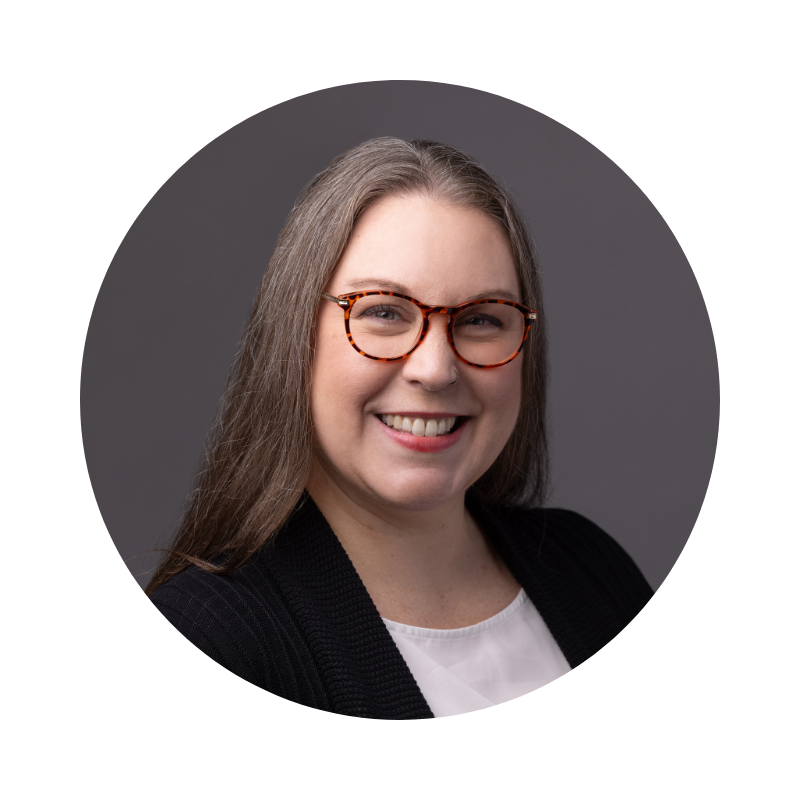
Megan Riedl
Director of Student Accessibility Services

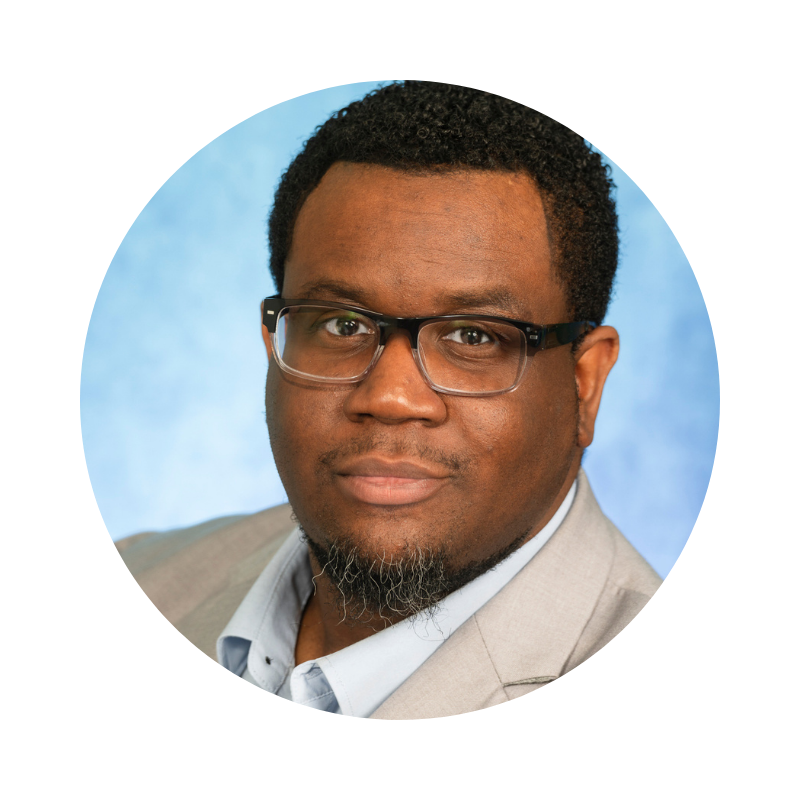
Derrick Gidden
Assistant Director of Student Accessibility Services
The challenge for SUNY Canton
Before Genio Notes, SUNY Canton's approach to note taking accommodations was a combination of tools and processes that created more work than they resolved.
The department tried Livescribe pens but were quickly abandoned. Lecture recording became the most commonly granted accommodation, but it placed the burden of note organization entirely on the student. Peer note takers filled the gap, but managing that program consumed a disproportionate amount of staff time.
"It was very work intensive on our part, finding appropriate students to take the notes, having them fill out the paperwork to get paid, then ensuring they were actually providing notes for the students. We paid them minimum wage at one hour per class per week."
For a department running lean, this was unsustainable. The team needed an accommodation that actually worked for students and didn't multiply the administrative load on staff.
Building a business case for Genio Notes
SUNY Canton first came to Genio back in 2021, making it one of the first institutions to adopt what would eventually become the Genio Notes platform it is today. The initial entry point was a one-semester pilot, which gave the team enough evidence to make the case for continued investment.
Funding came through the Perkins grant, a federal career and technical education fund available to many institutions. Megan drove the process internally, writing a proposal and cost justification that she brought to the Provost and the Grants office, working alongside the primary investigator for Perkins.
The case was straightforward. Genio Notes was the tool that reduced staff workload while improving the quality of the accommodation for students was worth the investment.
Securing buy-in for Genio Notes
For the initial implementation with a limited number of licenses, Megan made the call herself. She didn't need a lengthy approval process because the ask was modest and the rationale was clear. What built the case for more was the feedback from students who used it.
"With great feedback, it was easier to advocate for more licenses. When the funds were available for an institution wide license, I had support from administration."
Faculty engagement was handled deliberately. Rather than seeking sign-off from faculty at the outset, a decision Administration actively discouraged, Megan and Derrick took a different route.
A group of key faculty members were brought to the AHEAD conference, where they were able to see Genio Notes in context and hear from the wider disability services community about its benefits.
The result was telling. Faculty who had been unaware of the platform came back from AHEAD as advocates.
"By the time we came back to campus, they were on board. I'm not ignorant to the fact that the reason why they were on board wasn't just because they saw value in technology. It's because they already had in their mind that they were putting students with disabilities first. That's why they decided to go to the conference in the first place."
That insight has shaped how Derrick approaches faculty engagement more broadly: lead with the shared goal of student outcomes, not the tool itself.
Implementing Genio Notes
The path from pilot to institution wide was not a straight line. The early rollout was contained and relatively uncomplicated. The wider implications and discussions came later, when the move to an institution wide license meant that every student on campus now had access to Genio Notes, without any individual accommodation process required.
That shift surfaced some friction. A small number of vocal faculty members raised concerns at a campus-wide meeting, primarily around the concept of classroom recording. Derrick's response was deliberate, he let the moment pass rather than escalating it publicly.
Instead of a public debate, Derrick shifted to one-on-one conversations and focused on student-facing channels, including academic support services and direct student meetings, to build awareness from the ground up. Every student he met with was guided through the platform.
"Their eyes light up as I'm doing my demo for them. Telling them that you can just have this. As long as you're a student here and you have this email address, here you go."
The relationship with the Genio team throughout this process has been a consistent point of positive feedback.
"I can name the people by name. It is a testament to the amount you guys put forth in making sure that the relationship you have with clients is strong enough to kind of ensure success from at least your perspective."
Quantifiable gains for SUNY Canton
Reducing the accommodation burden
The most immediate impact was on the department itself. Paid peer note takers are no longer the default solution. The administrative overhead of recruiting, onboarding, and monitoring them has gone.
In its place is a platform that students can access independently, with support from the SAS team when needed.
"Paying note takers is just not a solution that makes a lot of sense. This concept of having a platform that bolsters you to take your own notes while providing you that backup that helps catch those things that you might miss has helped us to be able to help prepare our students."
Improving academic performance
Not only did Genio Notes significantly streamline the operations of the Disability Services office, it had a direct impact on learner performance.
Between the Fall 2025 and Spring 2026 semesters, data from more than 2500 students indicated that GPA increase was 169.1% greater for Genio Notes users.
These students also began, on average, at a lower GPA than non-users, emphasizing the impact Genio Notes can have on those learners who could be deemed more at risk while demonstrating that those engaging with technology are not solely high performers looking to improve even further.
Student engagement as evidence
Hard outcome data tells one part of the story. But Derrick points to something more qualitative as equally meaningful, the students who keep coming back.
"When you have ADHD, you're more likely to use something and, if you feel like it's not doing anything, stop using it and never touch it again. For my students to keep using it, that means something. It's a testament to how it worked for them, or how it must have made them feel like it was working."
He describes checking the platform every morning and finding that a student who had just graduated had logged in the previous day. The fact that they're done, yet they were still in there, is true testament to the impact Genio Notes has had.
Opening up the UDL conversation
One outcome that Derrick did not anticipate as clearly at the outset is the way Genio Notes has become a conversation-starter around neurodiversity and learning needs more broadly.
Faculty who attended AHEAD and saw the platform in action came back with a different perspective, not just on the tool, but on the students in their classrooms.
"I think it's highlighting a global issue that people might not even be aware of. Showing the tool that says, 'hey, this is what helps our students' opens their eyes to be like, 'I didn't even know my students needed help in this area.'"
That shift in faculty awareness is part of what makes the investment in the AHEAD trip worthwhile beyond the immediate buy-in it generated.
The future for Genio and SUNY Canton
The goal at SUNY Canton is UDL in its fullest sense. Developing an institution where support is embedded into the learning environment rather than delivered as an accommodation after the fact.
"The ideal is that we get to a place that's so inclusive there is no reason for me to be hired anymore. We get to a place where society, as a whole, is so understanding, so accepting, but also willing to do something about it."
Derrick sees Genio Notes as a meaningful step in that direction, and one with further potential to grow. Expanding awareness among student support services teams across the campus remains a priority for the coming academic year.
The plan is to bring Genio Notes to the groups that have the broadest student contact, including early alert programs and academic recovery support, so that the platform reaches students through multiple touchpoints, not just through the SAS office.
"Making sure you have a team of campus partners that's not just one area but multiple areas. A lot of these groups serve three or four hundred students each. If you can make sure your team is diverse enough that you're touching as many students as possible, that's how you do it."
For a platform that started as a notetaking accommodation for a handful of students, the ambition at SUNY Canton has grown considerably. And the foundation, built over years of careful, evidence-led expansion, is solid enough to support it.
Want to see what Genio Notes could do for your institution?
More from Case studies and user stories
View AllVolunteer State Community College Case Study

Discover how Volunteer State Community College leveraged Genio to significantly improve student retention, enhance student success and reduce stress for thousands of learners.

Manchester Metropolitan University Case Study
Discover how Manchester Metropolitan University (MMU) worked towards their goal of closing the attainment gap between underrepresented students and their peers through implementing Genio Notes.

Improving the lives of students and staff at the University of Central Arkansas
Learn how the University of Central Arkansas tried different accommodations before settling on Gneio Notes and finally granting students learning independence.
