









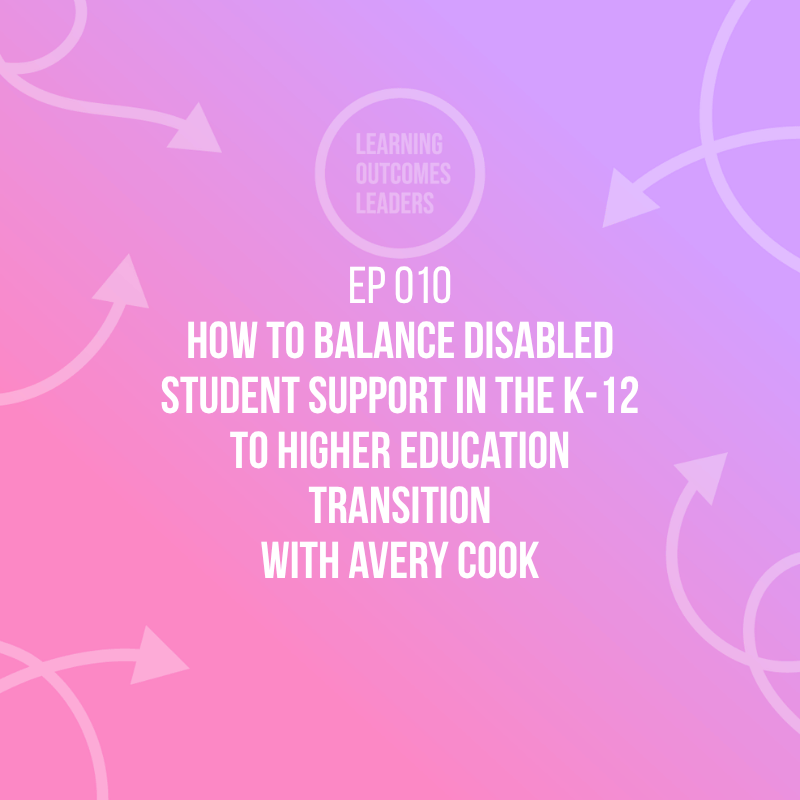
Welcome to episode 010 of Learning Outcomes Leaders, the higher education podcast from Genio.
College readiness isn't just about academic skills. It's about knowing how to ask for help.
In this episode, Avery Cook, Head of Accessibility Services at St. Cloud Technical & Community College, explains why high school supports don't carry over to college, how to balance "tough love" and "snuggle love" when supporting disabled students, and how accessibility services can prepare students and families before day one.
What will you learn from this episode?
-
Why don't IEPs and test modifications carry over from high school to college?
-
What's the difference between an accommodation and a modification?
-
How can accessibility services balance "tough love" and "snuggle love"?
-
What should students know about their disability before they start college?
-
Why is asking for help the real test of college readiness?
-
How can colleges support non-traditional students who are new to accommodations?
-
How can accessibility staff say no with empathy?
Listen to the full conversation below, or on your favorite podcast app.
Quick answers from the episode
Do IEPs transfer to college?
No, IEPs do not transfer to college. Avery explains that an Individualized Education Program (IEP) ends with high school, and colleges build a new accommodation plan. Modifications don't transfer either: a student who had multiple-choice options removed in high school won't get that in college. Accommodations can change how students show what they know, but not what's expected of them.
What should students know before they start college?
Students should know the differences between high school and college, and what students should know about themselves: what their disability is called, how it affects them, their academic strengths, and which accommodations worked. Most of all, they should know how to ask for help.
How can accessibility staff say no with empathy?
Accessibility staff can say no with empathy by listening for the need behind the request. When students ask for a modified test, Avery asks how they feel about the content. Most know the material but struggle with time or reading, so she can offer extra time, a read-aloud and test-taking strategies instead.
Subscribe to Learning Outcomes Leaders wherever you listen to your podcasts


Share this blog




Time for a simpler, smarter note taking accommodation?