









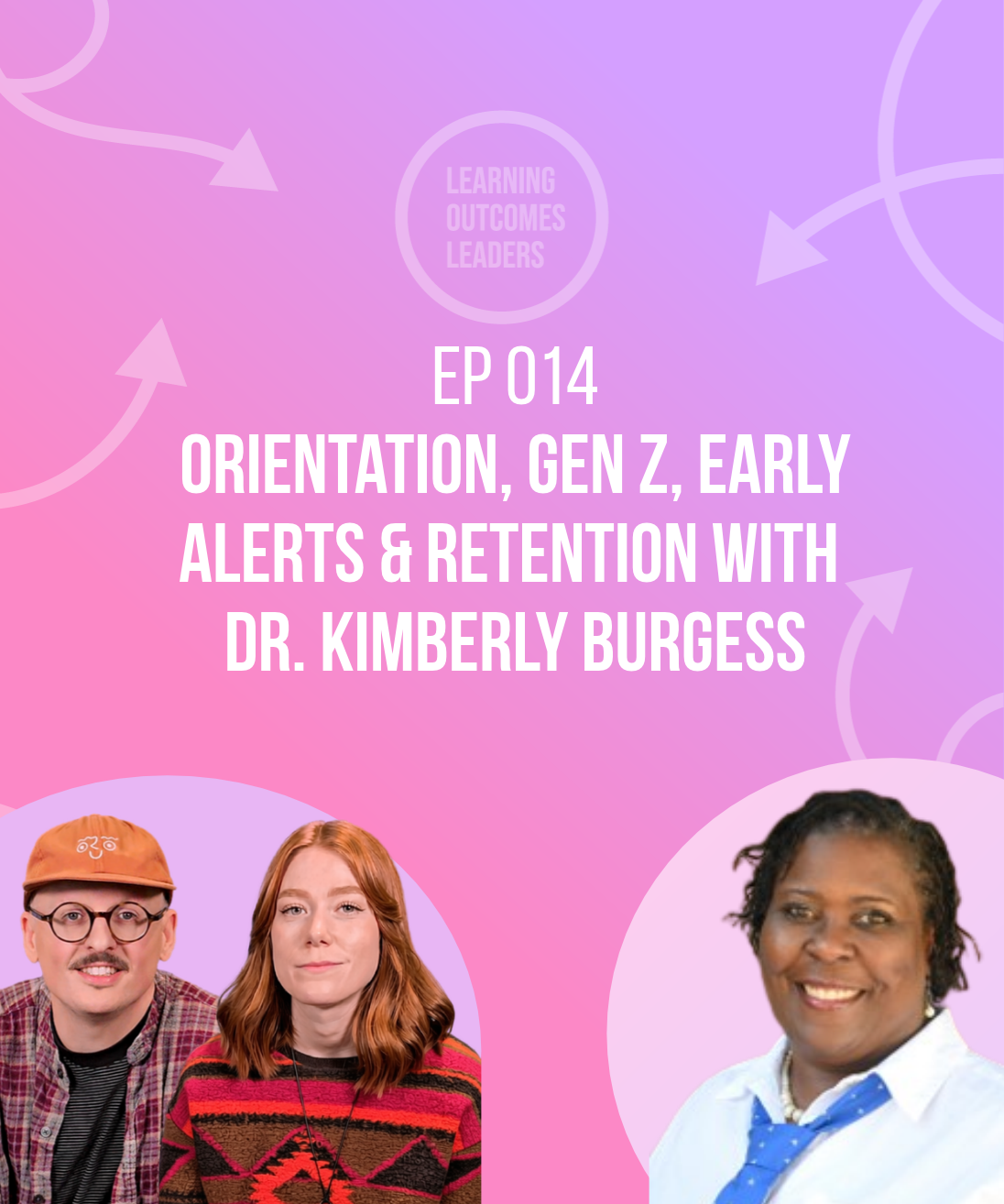
Welcome to Learning Outcomes Leaders episode 014, brought to you by Genio.
Welcome to Learning Outcomes Leaders episode 014, brought to you by Genio.
In this episode, we’re joined by Dr. Kimberly Burgess, Executive Director for Student Success at Albany State University, to discuss how data, honesty, and a redesigned orientation are helping first-year students start college ready to succeed.
Drawing on almost 25 years in student success, we explore why the first four weeks of the semester shape so much of a student’s first year, how asking “why” five times uncovers the real reasons students struggle, and how bringing parents and families in from February helped raise on-time tuition payment by 36%.
Want to find out more? Let’s get into the episode.
Key takeaways:
- The first four weeks of the semester shape first-year success. At Albany State University, 60% of students flagged at risk in week four went on to fail the class.
- Orientation works best when it gets business done first, with about 60% of the time spent on practical tasks such as financial aid and payment, then builds belonging.
- Training parents and families from February helped raise the share of first-year students paid by the deadline by 36%.
- Asking “why” five times reveals the hidden assumptions behind student failure, so programming can address the root cause.
- Gen Z students are driven by internal motivation, so support only works when it speaks to what students want.
Questions answered in this episode:
Why are the first four weeks of college so important?
At Albany State University, 60% of first-year students flagged at risk in week four failed the class. A week-four alert leads to midterm failure, which leads to end-of-semester failure, so the goal is to prevent the alert in the first place.
How should colleges design orientation for first-generation students?
Get practical business done first, such as payment, financial aid, and class schedules, then focus on belonging. Repeat key information several times, in several formats, and connect students with peer leaders.
Why should colleges involve parents in student onboarding?
Students often don’t think about college until late spring, while deadlines for payment and scholarships start much earlier. Training parents from February helps families prepare in time and gives them the right conversations to have with their students.
How do you find the root cause of student failure?
Ask “why” five times. A failed class traces back to a missed test, then missed classes, then a belief about what college requires, and programming that addresses that belief prevents the problems you can see.
How do you motivate Gen Z college students?
Gen Z students act when they want to, not because of rules on paper or outside pressure. Spend time listening to them in hallways, cafeterias, and your office, and shape your programming around what they want.
Subscribe to Learning Outcomes Leaders wherever you listen to your podcasts


Share this blog




Time for a simpler, smarter note taking accommodation?