


















For many college students, the term "AI" often conjures images of simple chatbots or quick cheats. But when used responsibly, AI becomes a sophisticated learning partner, not a replacement for thinking.
The most valuable AI tools in education today are those built to support your workflow, enhance accessibility, and strengthen your commitment to academic rigor.
These aren't tools designed to do your work for you. They're intelligent partners designed to eliminate unproductive friction, support executive function skills (like planning and organizing), and help you achieve deep, durable learning. When used correctly it can help make learning more accessible.
Here, we'll take a look at five of the best AI tools to help you with studying and assignments, let's dive in!
1. Goblin Tools - Best for task organization
For many students, the true barrier to success isn't intelligence or subject knowledge, it’s executive function. Overwhelming tasks, poor time estimation, and the challenge of just getting started can lead to procrastination and stress.
Goblin Tools addresses these challenges directly.
It offers a suite of simple, single-purpose AI features designed to turn daunting academic work into manageable steps. It’s a game changer when it comes to breaking down large study tasks and assignments into manageable chunks.
How Goblin tools helps manage large tasks:
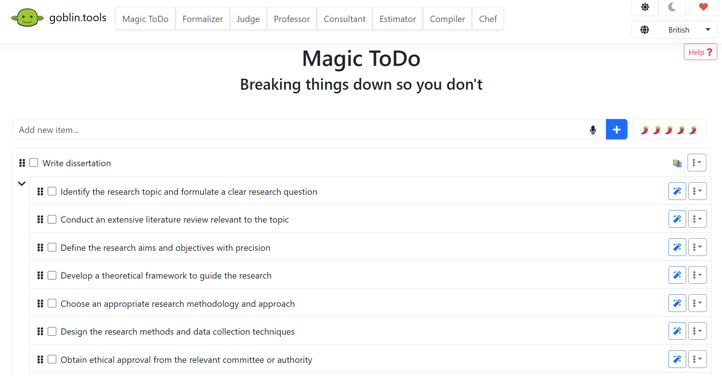
- Magic To-Do: The real star of Goblin Tools has to be the magic to do list. Take an overwhelming task, like "Write a 3000-word dissertation chapter," and the AI instantly breaks it down into small, actionable steps. This scaffolding makes starting feel less intimidating. You can choose 'spice' level too, depending on how broken down it needs to be.
- Estimator: This tool provides a realistic time estimate for a task. This is a great tool for students who struggle with time blindness, allowing for more accurate and less stressful weekly planning.
- Formalizer and Judge: These tools offer support in academic communication. Use the Formalizer to ensure your email to your professor maintains a professional tone, or use the Judge to check the emotional tone of a message you’ve received. This is excellent for building digital communication skills.
2. Genio Notes - Best study tool
Genio Notes is more than just a note taking tool, it has features so you can study from your notes and really test your understanding. It focuses on intentional automation, offloading the unproductive parts of studying while preserving the critical work that makes knowledge stick.
Genio Notes is a powerful example of when AI is applied specifically to learning. Built on learning science principles, it ensures you're always an active participant in your learning and that your notes lead directly to genuine understanding.
How Genio Notes helps you study:
- AI Outline: Immediately after a lecture or study session, Genio Notes quickly transcribes any recorded audio and uses it to generate a structured outline. This feature removes the friction of endless searching and organizes content, allowing you to dedicate your time to refining and synthesizing your notes - the core process for building strong memory.
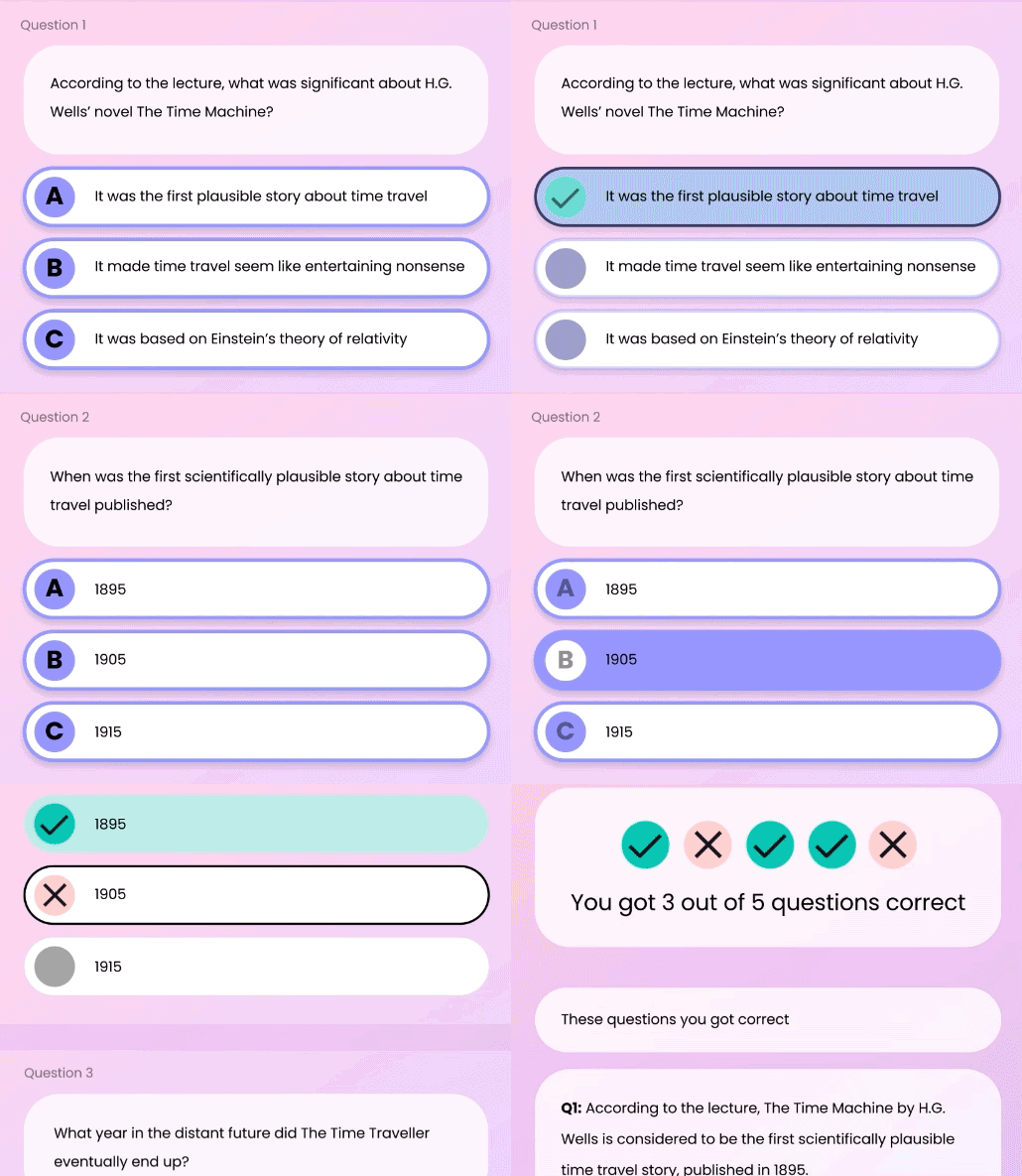
- Quiz Me: The most powerful feature for memory retention. Genio Notes can instantly generate multiple choice quizzes directly from your recorded content and notes. This leverages the scientifically-proven retrieval practice to solidify memory, identify knowledge gaps, and ensure knowledge is truly learned, not just recognized.
Genio Notes shifts the focus of your study time from passive review to active retrieval, drastically improving memory and exam preparedness, but most importantly helping you feel confident in your understanding and ability.
3. Claude - Best for academic writing support
While simple chatbots can be tempting for quick answers, they are rarely conducive to strong academic work. Claude distinguishes itself by being a more sophisticated thought partner, designed to help you refine your ideas and structure rather than generate content outright.
For assignment writing, it’s most useful to use AI in the "wordsmithing" stage - the drafting, editing, and structural refinement - while their original thought and research remain at the core of your own work.
How Claude supports high quality writing:
- Refining arguments and structure: Clear, specific prompts are key when using AI chatbots, instead of asking it to write an essay, ask Claude to help you create a stronger outline, suggest clearer transition sentences between paragraphs, or identify logical gaps in your argument.
- Academic tone and vocabulary: You can submit a section of your writing and ask the AI to suggest more precise academic language or adjust the tone to meet scholarly standards.
- Source management and verification: Responsible use of any LLM (Large Language Model) involves fact checking and proper citation. Use Claude to help organize your reference materials and ensure you are attributing sources correctly.
The integrity rule: Use Claude to edit, structure, and improve the presentation of your own original thinking. Always cite your primary sources and ensure full ownership of the final work.
4. NotebookLM - Your personalized research assistant
NotebookLM, developed by Google, is a powerful tool designed to act as a virtual research assistant on your own sources. It dramatically changes how you interact with large volumes of academic material.
The big difference between this and other AI platforms is that it operates on a closed universe of knowledge, ensuring academic integrity by working only with the notes, slides, lecture transcripts, and research papers you upload.
How NotebookLM supports deeper learning:
- Custom Q&A: The AI becomes an expert on your uploaded material. You can ask complex, synthesizing questions, and it will generate summaries and answers - all with verifiable citations back to the exact page or slide in your original documents. It’s sort of like having a subject expert available 24/7.
- Knowledge synthesis: By forcing you to make connections across a closed set of material, NotebookLM helps you move beyond simple memorization toward deep understanding. It generates summaries, outlines, and mind maps that show relationships between your different sources.
- Source verification: Every piece of information generated is traceable. This feature is crucial for maintaining academic rigor and teaching proper sourcing habits.
NotebookLM turns disorganized research piles into a connected, intelligent study guide, ensuring your focus remains on understanding the connections between ideas.
5. Brain.FM - Study playlists for sustained focus
Brain.fm is more than just a playlist app; it generates AI-composed music specifically engineered to support brainwave activity associated with different mental states: Focus, relax, or sleep.
While originally designed for those with ADHD, these focus playlists can help keep all students engaged and focused over longer periods of time.
This tool offers a researched alternative to traditional study music, helping you to manage distractions and achieve high levels of sustained attention during long study periods.
How Brain.fm supports concentration:
- Playlists for better focus: The music is non-lyrical and designed to fade into the background while remaining functionally effective, helping to maintain a consistent state of high focus without the cognitive interruptions of typical music.
- Phase locking: The music uses this technology to gently guide your brain towards a desired cognitive state. This process, known as neural phase-locking, ensures your brainwaves synchronize with the sound, leading to a state of sustained focus.
- Time to decompress: Part of having good study habits is knowing when to switch off, and genuinely being able to. It can be hard to sleep and truly disengage from your thoughts during busy study periods, but using Brain.FM’s designated sleep, meditate and relax playlists can help you practice mindfulness and get a genuine rest.
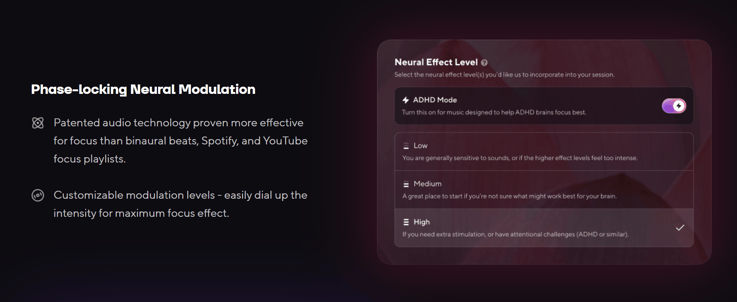
Key Takeaway? Brain.FM uses sound science and AI composition to help you enter and maintain a state of deep work, making study sessions more productive and efficient.
The key to using AI successfully in higher education is a mindset shift: AI is an ally, not a replacement.
By choosing tools built on learning science, and effectively using prompts when needed, you’re not looking for a quick fix. You’re adopting sophisticated technology that supports your brain’s natural processes for memory, organization, and critical thinking.
This is what it means to study smarter.
Share this blog





Time for a simpler, smarter note taking accommodation?